
By Jess Mayhugh
Maternity leaves are not a walk in the park. Many new parents find themselves in a haze, exhausted and unmoored, dealing with bodily fluids and/or an existential crisis. But there are plenty of blissful moments, too. It is a time when the focus can shift entirely to family, allowing work to take a temporary backseat. At least, that’s what I’ve heard. For incredibly different reasons, both of my maternity leaves were ruined. While I know no two leaves are alike, I can safely say I got a pretty raw fucking deal.
My first leave was in 2022, after my daughter died in the NICU at just four days old. I was the first person who approached my company with this particular dilemma: I had a baby, but she was no longer living. After a few back-and-forth phone calls, human resources allowed me to take my leave in full. I was told that the policy changed because of this and it’s now thought of as “postpartum leave,” a much more inclusive term that I consider part of my daughter’s legacy.
I have written fairly extensively about the grief and turmoil of my postpartum experience. Returning to work was jarring. I was a dark cloud in every meeting, and daily life became a social battlefield. I was never quite sure who knew I had lost a child and ended up protecting other people’s emotions more than my own. In those first few months back, I felt like an insecure shell of myself, not the confident and gregarious coworker I had always been. Work became yet another emotional obstacle that I had to grin through and bear.
Time helped. And so did science. After five rounds of IVF, I became pregnant again in the spring of 2025. During my pregnancy, I tackled several huge work projects, traveled for my job a few times, trained my colleagues on software and skills, and put together a foolproof parental leave plan for my managers. I had my son, Cole, last December and we were both happy and healthy.
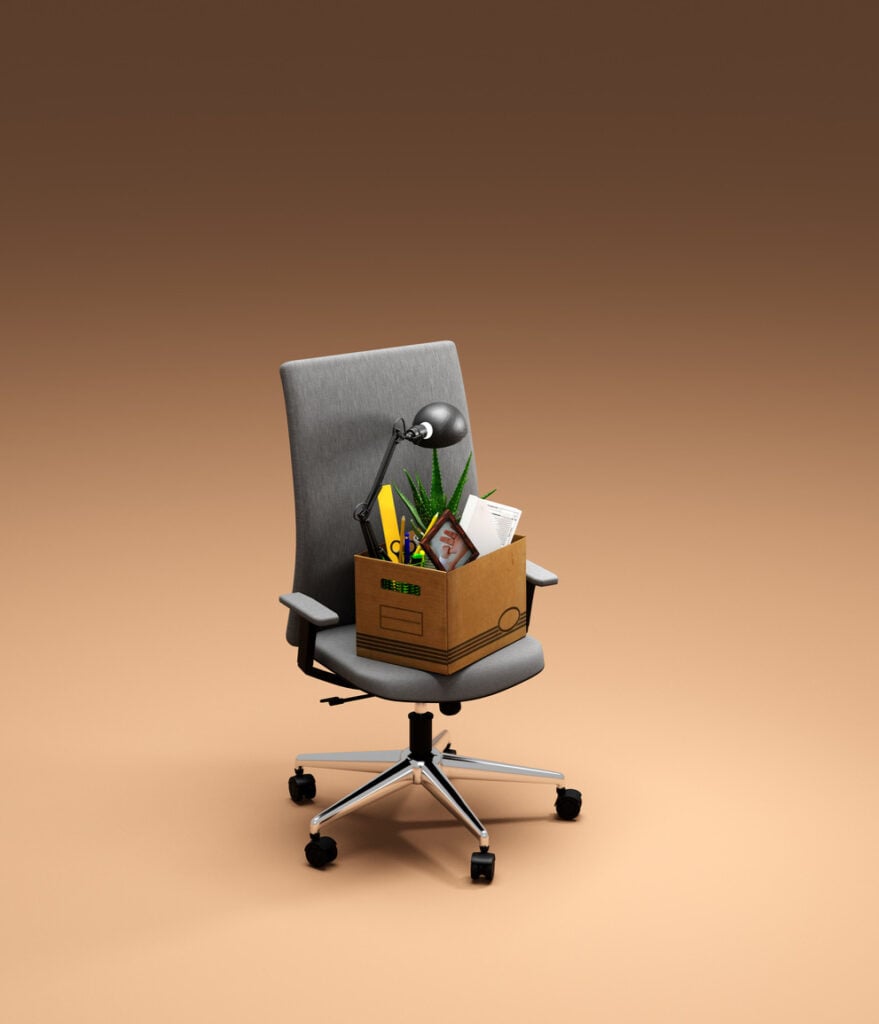
I wish I could embed the audio of a record scratch here. Six weeks postpartum, I got a text from an executive at my company, asking if she could call me. Anyone who has worked in media — hell, any industry today — knows this feeling. My heart raced, my mind oscillated between they wouldn’t and they would. Turns out, they did. It was a brief, emotionless conversation, followed by a talk with an HR rep about next steps. My husband walked partway down the stairs, saw my face, and knew. We both looked over at Cole, a tiny, swaddled burrito on his Boppy. The future I had worked so hard to build for him was blurry through my tearful eyes.
In my middle-class ‘80s upbringing, ambition was a non-negotiable. With two working parents, I was introduced early to the idea that a job, and carving your career path, was innate to your identity.
As soon as I could legally get a work permit, I did. As soon as I figured out that I could turn writing into a career, I locked in. I was one of few people I knew who had an internship while still in high school. At the age of 16, I worked as an unpaid intern in the features department of my hometown’s flagship newspaper. I was woefully unprepared to be in a professional setting, my thrift store T-shirts and studded belts sticking out like sore thumbs against a backdrop of gray cubicles and paisley neckties.
But it got me clips (the real-life newsink kind) and recommendation letters, and started a trajectory of one job leading to the next. I’d hopped on a train that simply plowed ahead without ever thinking to look out the window. Yes, I was gaining experience and networking, but I saw every role on my résumé as a necessary stairstep to the next level, blocks to simply keep stacking upward. Through years of burnout and promotions and accolades, my jobs became my personality, and the other way around.
Despite it all, I still find myself here: a 40-year-old unemployed journalist unsure about my next move. Because of a failing economy, corporate consolidation, and the 800-pound AI robot in the room, this job market’s power imbalance is at its apex. Prospective jobs that used to feel fairly attainable are now impossible, and the ghosting is rampant and real. Employers seem to have carte blanche, laying off pregnant and postpartum people and those on medical leave. In this country, safety nets were never a guarantee, and now there are fewer to be found.
I’ve had many job interviews and coffee meetings where I share the news that I got laid off while on maternity leave. To a person, the reaction is: “Isn’t that illegal?” Generally, the answer is no. There are many advocacy groups, like nonprofit A Better Balance and the UK-based Pregnant Then Screwed, that are looking to change that and, in the meantime, provide resources for families in this exact situation.
The high school senior version of myself would be terrified to see this in her crystal ball. But I’m viewing this pause very differently than she would have. It’s allowing me to reflect on why I did the work for so long, and who exactly was benefitting from it. Somewhere along the way, I forgot that I fell in love with journalism by way of writing, by way of creating, by telling stories no one else was.
Ironically, not having a job has allowed me to think more deeply about my career than I ever have. This time has allowed me space to look up from my laptop — though, admittedly, not currently — to ask myself when I last felt fulfilled and happy. I am cobbling some income together through contract jobs and freelance stories, and a close friend and I started a passion project of which I’m extremely proud. A pause is also possible because of privilege. I did receive severance, and negotiated for long-term insurance coverage. I am one of the lucky ones.
Like so many before me, I will find my way out of this fog. But I won’t just be mindlessly stacking blocks. I’ve already begun shedding old habits: setting down firm boundaries, being intentional with my time, finding more enjoyment in the process than in the result, finally starting to notice what’s out the window.
–
Jess Mayhugh is a writer and editor whose work has appeared in The New York Times, The Atlantic, Saveur, Eater, Punch, Thrillist, Baltimore magazine, and Smithsonian Magazine. She co-founded a newsletter called Folly, featuring honest and complicated stories about building a family. She lives in Baltimore with her husband, son, and two unhinged cats.