
By Lisa McCarty
In her posthumous memoir An Unexpected Life, which hit shelves Tuesday, Gloria Steinem talks about the difficult experience of being the sole caretaker to her mother, Ruth, starting at age ten. As a young girl, Steinem did the grocery shopping and prepared meals alone. “She couldn’t always take care of herself. It was scary,” Steinem said, of her mother, to Oprah Winfrey in 2012. Despite always feeling loved, she said, “I grew up too soon.” That burdensome role sent her into survival mode, where she became hyper-independent and self-reliant.
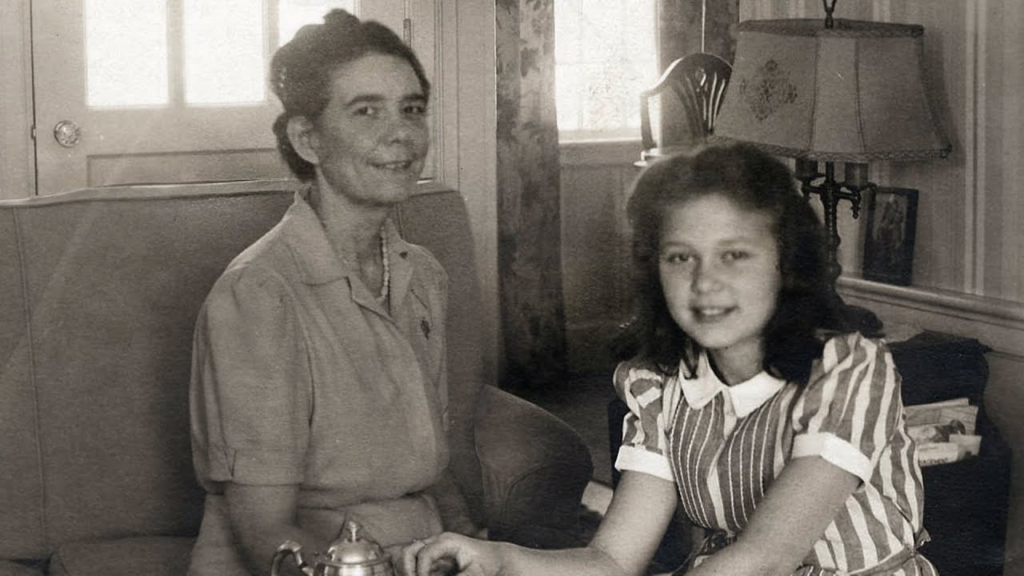
I was also forced to become my mother’s primary caregiver, after a traumatic brain injury left her incapacitated and unable to function independently. For the next several years, I managed the cooking, cleaning, and the bills. My mother depended on me for everything, so I suppressed my own needs and stopped relying on her as a source of emotional support.
Both Steinem and I learned to raise ourselves. Psychologists refer to this role reversal as parentification, when a child is given too much responsibility for their age. According to AARP, there are an estimated 5.4 million children caregiving for chronically ill and disabled family members in the U.S. Many of them are parentified and are performing this work daily, often with no support. This role forces children to grow up too soon, leading to detrimental effects that last into adulthood and can delay marriage and motherhood.
In fact, a paper published in the The Family Journal showed early caregiving can impede normal development of relationship building and is also associated with the fear of having children. Experts say there is a higher risk for mental health disorders, substance use, and suicidality in this group than their non-caregiving peers. Dr. Kate Cummins, a licensed psychologist, explains hyperindependence is an adaptive coping mechanism. “This creates a pattern of nervous system dysregulation they take into adulthood,” says Dr. Cummins. “The body responds to this lack of safety with fight, flight, freeze, or fawn – also referred to as people pleasing.”
Dr. Lauren E. Duncan, a professor of psychology at Smith College who has studied Steinem’s upbringing for ten years, found that with parents that were an unreliable source of support, she likely developed an insecure attachment early in life. Dr. Duncan told me that, “When children are distressed, responsive and sensitive, caregivers tend to produce children with secure attachments, who are able to form mutually supportive, trusting, and responsive connections as adults. In contrast, unavailable or unresponsive caregivers tend to produce children with avoidant attachments, who resist closeness with others and over-value autonomy as adults.”
After graduating from college in the late 1950s, Steinem broke off her engagement with her fiance, traveled overseas, and rejected societal pressures to start a family and find a partner. In a 2008 interview with The New York Times, she reflected on her views, saying, “Once you got married, it was the career of your husband and the needs of your children. And if you really deeply believe that, it’s like death. I assumed I was going to get married and have children, but I was just delaying it.” Decades later, in the early eighties, at 42, she went through psychodynamic therapy after being diagnosed with breast cancer. Through treatment, she learned she’d always been “Ms. Fix it, avoided confrontation, resistant to introspection, constantly on the move, battling a fear of overeating.”
I had a similar experience in my 20s. I dated a series of emotionally immature men who wanted to be taken care of, but not get serious. I thought if I loved them and gave them enough, like I’d done for my mother, I could make it work. I was wrong. They were incapable of commitment and cheated on me repeatedly. So I disassociated, focusing on my career in advertising, communications, and eventually, writing. It was easier to distract myself and ignore it than deal with my past. It wasn’t until my late twenties that I began cognitive behavioral therapy and started to recognize my unhealthy coping patterns, my own insecure attachment style, and tendencies toward co-dependent relationships.
Despite the long-term effects of early caretaking in adulthood for both Steinem and I, new research from the Journal of Behavioral Sciences found these issues can be repaired through therapy with development of coping tools and by learning to engage in healthy partnerships.
My perspective on marriage and motherhood changed after working with a therapist and I did end up getting married. My now husband and best friend have been together for over 20 years.
Steinem also eventually wed. She was in her sixties when she married a man named David Bale, three years before he died. Many people were shocked by their union, since she’d been adamant about remaining independent and single. In an interview with People magazine, she said, “We spent 30 years in the United States changing the marriage laws. If I had married when I was supposed to, I would have lost my name, my legal residence, my credit rating, and many of my civil rights. That’s not true any more. It’s possible to make an equal marriage.”
Motherhood was a different story, as she held firm in her decision to not become a parent. When asked if she had any regrets about not having kids, Steinem said. “No. Absolutely not. I’m not sure why, except perhaps because when I was growing up, I was looking after my mother who was not well. I’ve noticed other people who were small people looking after big people don’t want to do it again.” In contrast, I did decide to have kids. After some hesitation concerning motherhood and struggles to get pregnant, I was able to have two children via IVF. I’m grateful for it and it’s made my life feel more complete.
While the adverse effects of being a caretaker in early childhood are well-documented, there’s also a lesser known “superpower” for those who take on that role experience – increased empathy. A small study published by the Journal of Public Library of Science in 2018 suggested traumatic events in childhood, such as taking on a caregiving, “increases a person’s ability to take the perspective of another and to understand their mental and emotional states.”
This was true for both Steinem and I. Although we chose different paths when it came to motherhood, we had a similar goal in our lives and careers – to support other women.
As a leading voice for key issues like reproductive rights, equal pay, and equality in the LGBTQ+ community for nearly 60 years and a writer, Steinem’s advocacy inspired me to follow a similar path. Ai-jen Poo, the president of the National Domestic Workers Alliance, president of Care in Action, and the executive director of Caring Across Generations wrote in an article for Time about Steinem, “Her true gift was helping so many of us see the hidden stories, ideas, lives, and contributions of women.”
Like Steinem, I also found a passion for writing and advocating for women’s health, mental health and caregiving. I too became a journalist to listen, educate, and connect with others.
In Steinem’s words, “The final stage of healing is using what happens to you to help other people. That is healing in itself.” For those who grew up too soon, especially as young caregivers, this is how we can honor the burden we had early in life – by carrying on the legacy she created and paying it forward to the people who need it. It’s a meaningful way to support others so they feel more visible and valued than we did.