
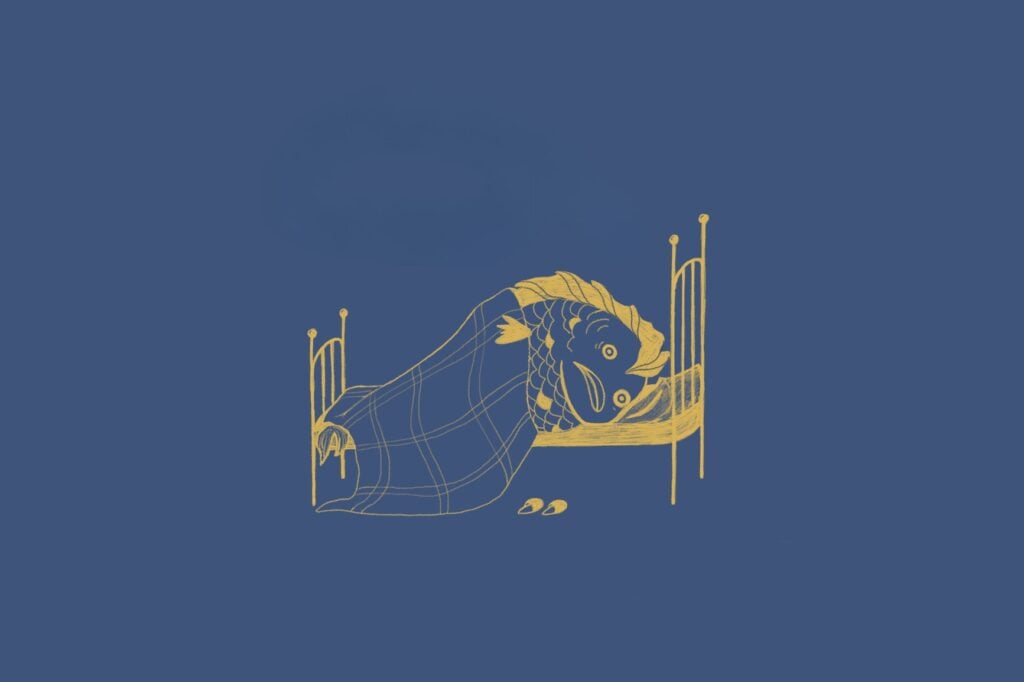
By Ines Bellina
When my mom brought me home from the hospital as a newborn, she was anticipating a steady stream of sleepless nights that come along with a baby. To her surprise, I slept through the night that evening — and every evening that followed. I was the kid who kept to her bedtimes, the teen who rarely slept past breakfast, the college student who never pulled an all-nighter. My sleep prowess, though, came to an abrupt halt when I entered my 40s. Suddenly I was waking up in the middle of the night and tossing and turning for hours.
According to the American Academy of Sleep Medicine, 50% of women aged 45-64 experience sleep disruption as they transition to menopause, but sleep issues can begin as early as our mid-30s. Friends flooded my DMs with their own tales of night sweats, insomnia, and even irritating buzzing sounds in their ear that kept them awake.
Sleep, for many, had become totally unpredictable. “There’ve been periods that were really bad and other times I really don’t experience it,” said Rachel León, a writer and social worker in her late 40s. “I either wake up in the middle of the night and find myself unable to sleep for hours or I have a hard time falling asleep despite being tired.”
To learn more about why perimenopause keeps us up at night, I talked to Dr. Seema Venkatachalam, partner and practice medical director of the Northwestern Specialists for Women in Chicago and an assistant clinical professor at the Feinberg School of Medicine at Northwestern University. The interview has been edited for brevity and clarity.
What are the common sleep issues in perimenopause?
When Hillary Clinton said in 2016, “Who are you going to call at 3am?” You’re going to call any perimenopausal woman at 3am because we are going to be awake.
For most women, it’s not usually difficulties with falling asleep. If [that does happen], we have to look at our lifestyle. Are we drinking alcohol later in the evening? When was our last caffeinated beverage? Are we exercising? Do we still have children at home? Are we still working?
Staying asleep is a different issue because of the way estrogen and the progesterone levels are fluctuating. In our twenties and thirties, our hormones are like the Appalachia Mountains. The levels are gentle rises and falls that look like bell curves. In perimenopause and menopause, they look like the Rockies — huge peaks and troughs of estrogen and progesterone. It disrupts the body’s temperature regulation, therefore disrupting the natural sleep cycle. A hot flash or a night sweat can wake up a woman outside of the natural REM cycle. Each cycle takes about ninety minutes and that’s typically how long it takes for a woman to be able to go back to sleep.
Another cause is sleep apnea, which is highly underdiagnosed. Do you snore? Do you have pauses in your breathing? Your thyroid should also be checked. It’s just as important to ask what are the external influences that might be influencing our sleep.
How do estrogen and progesterone help us sleep?
Estrogen and progesterone really are side players. There are a lot of other hormones in our body that are far more influential when it comes to sleep. But estrogen does affect the hypothalamus, which is the part of the brain that regulates body temperature. It’s for that reason that we get these waves of intense heat.
What I experience is being suddenly awake at 3am, staring at the ceiling or having the urge to go pee. What’s happening there?
It’s normal to wake up once or twice in the middle of the night to go to the bathroom to urinate. The question is: Can I fall back asleep when I get back to bed? An increase in anxiety is a natural part of perimenopause. Somebody may say they don’t feel anxious, but they find themselves perseverating on thoughts that five years ago would have been dealt with the next day. That’s because of the way estrogen works on our mood. It increases these big fluctuations, which increases anxiety.
It’s the same way PMS works. You get huge fluctuations of progesterone and estrogen in the third week of the cycle because these surges in hormones are meant to protect a potential pregnancy. But they also have the added influence on our brain that can increase anxiety, emotional changes, and irritability. That contributes to the difficulty of falling back asleep as well. The increase in anxiety during perimenopause and menopause also affects our cortisol level, which disrupts serotonin and melatonin and our sleep cycle too.
I’ve read hormone replacement therapy could help when it comes to perimenopause symptoms, including sleep. I’d love to hear your thoughts on that.
Perimenopause is a time of hormonal imbalance, but our hormone levels within our body are still normal. We don’t need replacement, we need balance. If a woman is still getting regular menstrual cycles, the first line of therapy for perimenopausal symptoms is birth control pills to bring that estrogen and progesterone back into balance. I wish we could coin it differently than birth control pills because the connotation is contraception. In fact, what we’re doing is menstrual regulation.
It’s also important to look at holistic approaches to sleep. Too many women put their smartphone right in front of their face as soon as they can’t get back to sleep. Blue light disrupts sleep and melatonin function. We need to exercise more. We need to make sure we’re not drinking alcohol just before bedtime. There are medications such as Venlafaxine, which improves sleep by treating perimenopausal and menopausal anxiety. There are both hormonal and non-hormonal ways to address the issue.
The discussion of hormone replacement therapy should occur with one’s provider, typically when periods are starting to skip. It does help with sleep disruption in the later stages of perimenopause and menopause, just like contraceptive pills help in early perimenopause.
Do other forms of contraception also have a regulating effect when it comes to perimenopause symptoms and sleep?
IUDs work locally on the uterus and can help with heavy periods. Making periods lighter or even absent might mean you’re not waking up in the middle of the night because of the wetness of a pad. That can prevent sleep disruption, for example. But progesterone IUDs are not influencing the systemic fluctuation of estrogen and progesterone in our body. Diaphragms don’t have an influence. If somebody had their tubes removed or if they’ve had a tubal ligation, that won’t have an influence on their sleep regulation either.
How about the use of DHEA (dehydroepiandrosterone, a steroid hormone that helps produce estrogen and testosterone) or progesterone?
DHEA and DHEA-S are hormones that are more associated with polycystic ovarian syndrome and are influenced by estrogen and stress. For some people, a DHEA supplement may be the right thing. If you’re still having regular menstrual cycles, there are progesterone-only birth control pills. The slightly higher doses help with balance of the hormones.
We see a lot of med spas and clinics prescribing progesterone to women and then they come to my office four months later asking, “Why is my menstrual cycle so disrupted? Why is my period so much heavier? Why am I having some mood swings?” They may be sleeping better, but progesterone is also the hormone that influences PMS. We see some negative effects as well.
Some friends use melatonin creams and other supplements to help with sleep disruption. Does science back this up?
There is no good data for melatonin creams. Other supplements can be helpful. Magnesium glycinate, for example, can help with a more restful sleep and is often a first line over-the-counter that someone can try.
When it comes to restless nights, I often wonder if it’s even perimenopause. Is it stress? Is it the world imploding? Should we just consider it one big package?
It’s probably the question every perimenopausal woman has had in every generation because every generation has had their own external factors that have influenced them. It’s important to have an honest conversation with yourself. What am I dealing with in my daily life? What concerns me? What am I doing to try to help with that? Am I reaching out to a therapist? Do I have friends and family that support me? Am I exercising? Exercise has been shown to be one of the best treatments whether for sleep or perimenopause. Are we also setting proper sleep hygiene? But accepting that after age forty there are hormonal influences is important and a conversation to have with your provider.
Does any of this improve once we fully transition into menopause? Or are we cursed till the end of our days?
Yes, when the hormones stop fluctuating quite as greatly, we see a deep improvement. Postmenopausal women don’t need as much sleep to begin with. They can go six to seven hours without feeling as fatigued. It absolutely does change on the other side of this hormonal cycle.